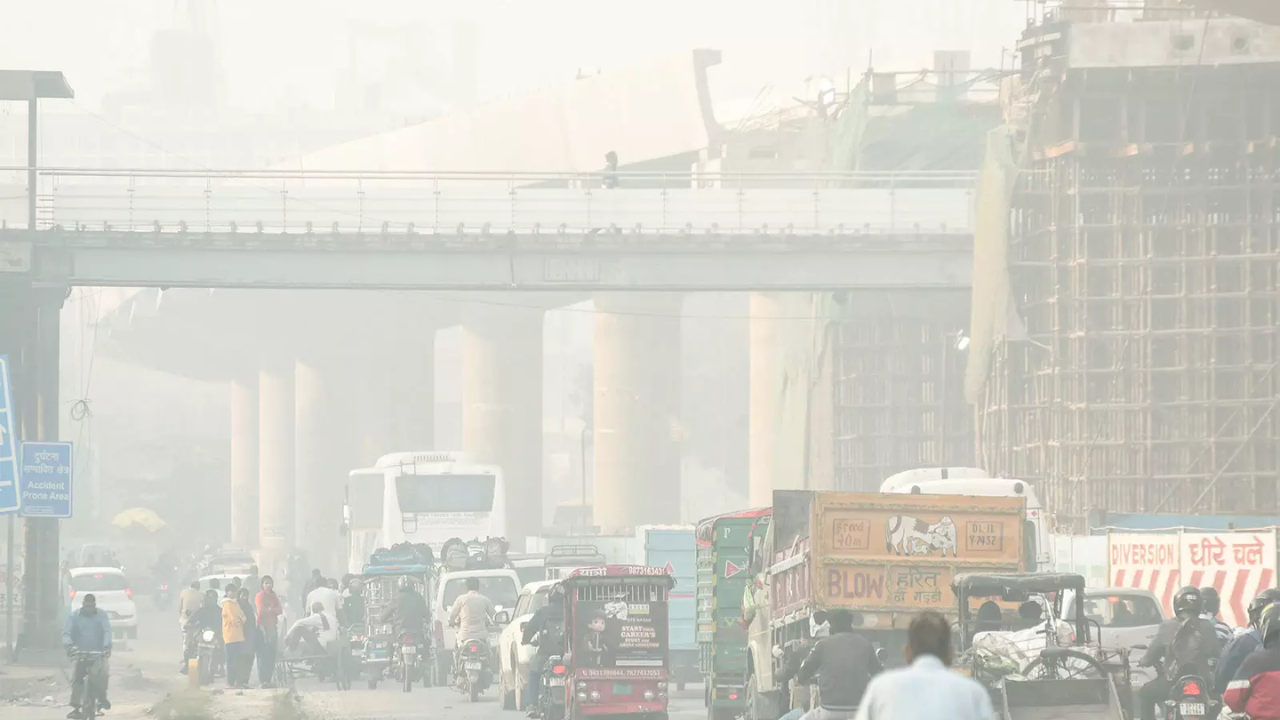
Delhi's air quality has reached alarming levels, marking its first 'severe' air day of the year, with an average Air Quality Index (AQI) of 428 reported on Tuesday. This situation has not been seen since December 19 of the previous year, when the AQI hit 451. Contributing to this poor air quality is a combination of stagnant winds and falling temperatures, which allowed pollutants to build up and form a persistent smog. On Tuesday morning, visibility was drastically reduced to 600 meters in Safdarjung and 700 meters in Palam. In response, the Commission for Air Quality Management (CAQM) has enacted Stage III restrictions throughout the National Capital Region (NCR), which includes Delhi and neighboring areas like Gurgaon, Faridabad, Ghaziabad, and Gautam Buddh Nagar.
The restrictions include a halt to all construction and demolition activities, as well as a ban on non-essential diesel-operated medium goods vehicles and specific car models that do not meet emission standards. Additionally, the Directorate of Education has ordered that all schools conduct classes in a hybrid mode for students up to Class V. To alleviate traffic congestion during peak hours, authorities have also suggested staggering office hours for public and municipal employees.
Despite a brief break in weather conditions that allowed for improved visibility during the late morning hours, haze remained prevalent throughout the day. With a recorded minimum temperature of 10.2°C at Safdarjung, the cold weather has further exacerbated the air quality crisis. Meteorological experts, such as Mahesh Palawat from Skymet, have advised that calm nighttime winds and cooler temperatures contribute significantly to the trapping of pollutants near the surface. Although winds are expected to pick up slightly, potentially improving air quality by Wednesday, forecasts continue to indicate that the AQI will remain at 'very poor' levels until at least Friday.
Data from the Central Pollution Control Board revealed that 33 out of 39 monitoring stations in Delhi recorded levels classified as 'severe' at 9 a.m. on Tuesday. The most polluted areas included Bawana and Wazirpur, where PM2.5 levels soared to unsafe concentrations. The ongoing air quality deterioration has raised concerns among residents and activists, igniting protests demanding cleaner air. As authorities continue to monitor the situation and implement necessary measures, the daily implications for thousands, particularly low-wage workers affected by construction bans, remain significant.