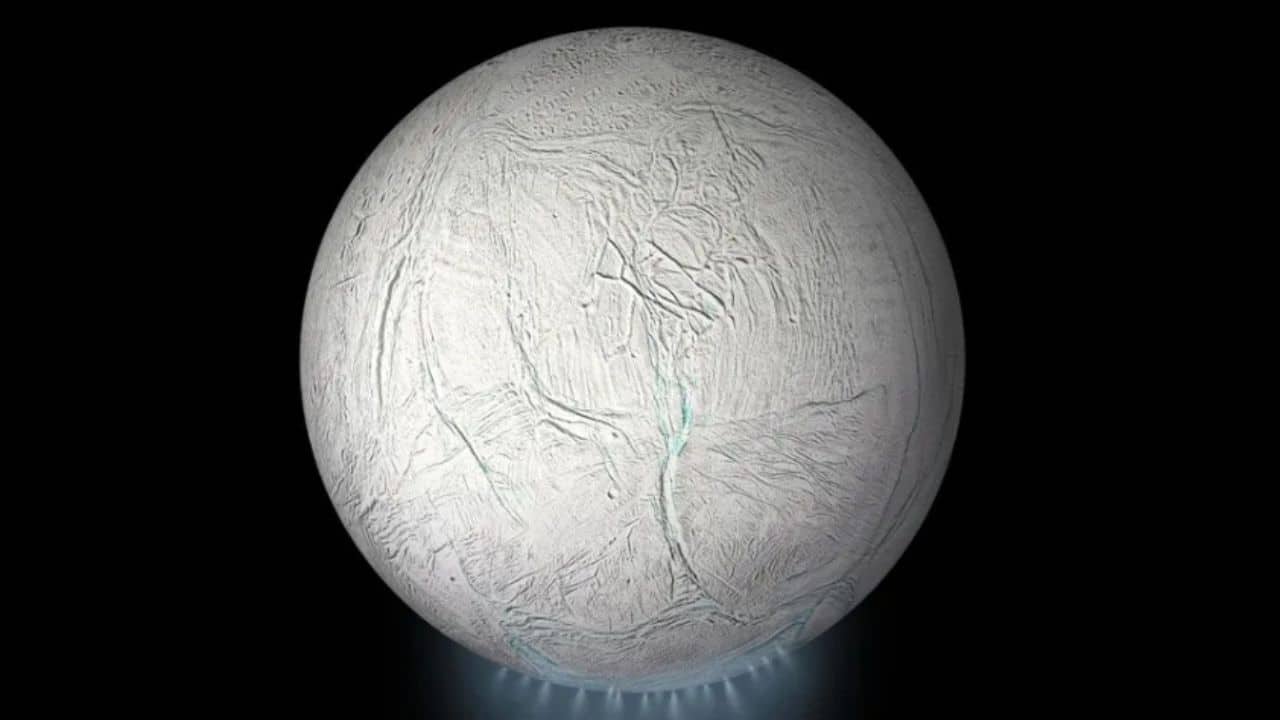
Recent research has unveiled intriguing possibilities regarding the icy moons in our solar system, suggesting that these celestial bodies harbor subsurface oceans that could reach boiling temperatures under certain conditions. Scientists have postulated that thin ice layers covering these oceans can lead to unique thermal dynamics, where reduced pressure enables liquid water to transform into vapor. Notably, this boils down to interactions near the water triple point, a scenario that is distinctly different from boiling on Earth.
The study draws attention to smaller icy moons, particularly Enceladus, Mimas, and Miranda, all of which are believed to possess subsurface oceans beneath their icy exterior. Researchers caution that as the ice shells of these moons thin, the risk of the underlying liquid water boiling increases. Despite this seemingly inhospitable environment on the surface, the findings suggest that life may still persist at greater depths, insulated from the harsh conditions above.
On these icy moons, boiling does not occur in the same manner as observed on Earth. Instead, it arises due to unique conditions where liquid, ice, and vapor coexist around the water triple point. The dynamics at play in these moons’ oceans suggest a rich potential for chemical interactions that are essential for life.
These revelations challenge long-held beliefs about the habitable environments available in our solar system. Icy moons, which were previously thought to be relatively stable, are now considered to be geologically dynamic, with boiling oceans possibly affecting critical chemical processes. This insight widens the scope for future astrobiological exploration, making these moons prime candidates for missions aimed at discovering extraterrestrial life.
Looking ahead, future exploration missions to moons like Enceladus and Europa are anticipated to assess the viability of these hypotheses. Researchers are eager to deploy spacecraft equipped to measure ice thickness and investigate the dynamics of the subsurface oceans. Such missions could provide groundbreaking insights into whether life exists beneath the volatile layers of ice.
This study fundamentally shifts the current understanding of habitability beyond Earth, emphasizing the importance of moons with thin ice shells as potential hosts for life. The possibility of sustained life in extreme conditions enhances the exciting prospects of astrobiological research in our solar system.