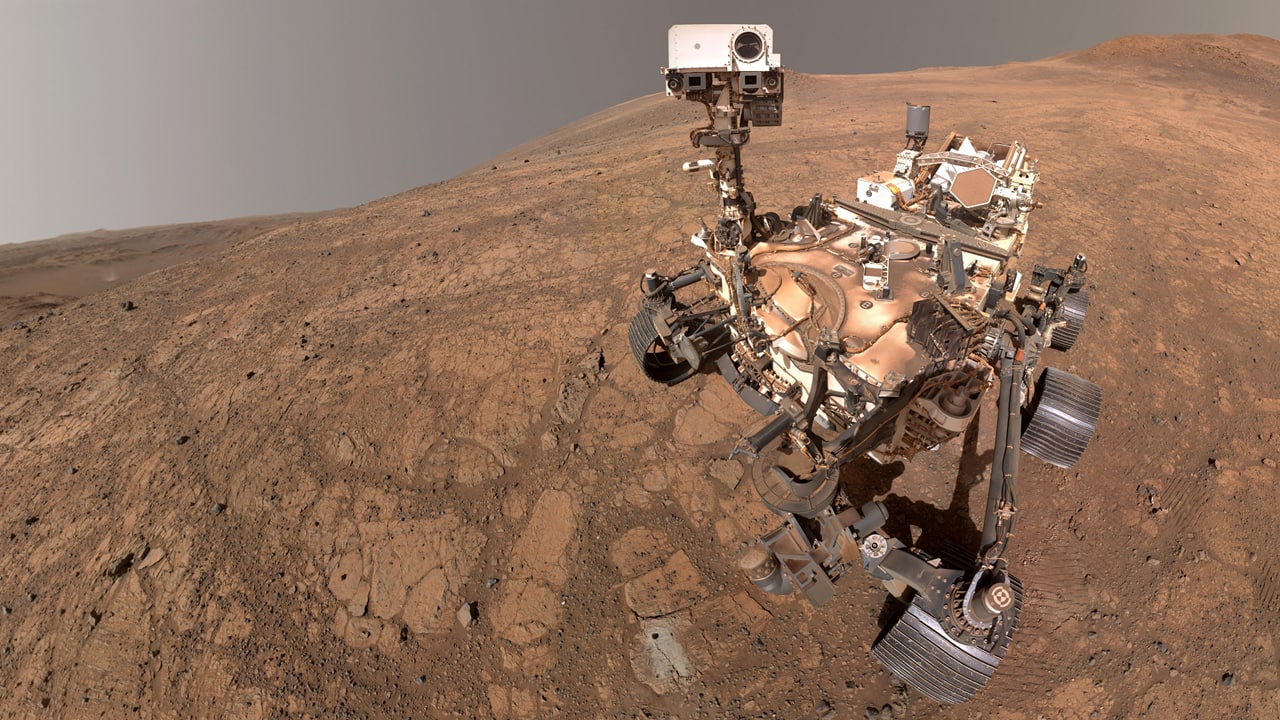
NASA's Perseverance rover has revealed compelling evidence indicating the presence of electrical activity in Mars' atmosphere, particularly manifesting in what one scientist termed as 'mini-lightning.' This phenomenon closely links to swirling wind patterns known as dust devils that frequently traverse the Martian surface. Operating since 2021 in the Jezero Crater in the northern hemisphere, the rover has recorded these intriguing electrical discharges through its SuperCam remote-sensing instrument, marking the first instance of such electrical phenomena documented on Mars.
Baptiste Chide, a planetary scientist and lead author of a recent study published in the scientific journal 'Nature,' emphasized the significance of these findings. According to Chide, these electrical discharges could have profound implications for Martian atmospheric chemistry, climate, and the prospects for both robotic and human exploration of the planet. Notably, the electrical charges implicated in these discharges are likely to affect the transport of dust on Mars, a critical element of its climate system that remains largely unexplored. Furthermore, such electrostatic discharges may pose risks to robotic mission equipment and future astronauts planning to visit the Red Planet.
The team of researchers carefully analyzed 28 hours of audio recordings made by the Perseverance rover over two Martian years, successfully identifying 55 electrical discharges typically associated with dust devils and dust storm fronts. Ralph Lorenz, a planetary scientist and co-author of the study, clarified that while they did not observe lightning as commonly defined, the detected sparks could be likened to small electrical arcs, evoking a sound similar to a whip crack.
The rover recorded sixteen of these electrical discharges during its close interactions with dust devils. Previous studies indicate that dust devils are essential features of Mars's dry and dusty environment, with orbiting spacecraft measuring wind speeds in these vortices that can reach up to 98 miles per hour (158 kph). The occurrence of electrical discharges can be attributed to the internal dynamics within these dust devils.
Chide describes the phenomenon as 'mini-lightning,' born from the friction between tiny dust particles that generate a charge, which is then released as brief electrical arcs a few centimeters in length, often accompanied by audible shockwaves. The process known as triboelectricity operates similarly to the small sparks generated when walking across a rug and reaching for a metal doorknob.
Research has long insinuated the potential for electrical activity within the Martian atmosphere, which has now been confirmed due to sensitive instrumentation deployed over an extended observation period. Mars now joins Earth, Jupiter, and Saturn as celestial bodies known to exhibit atmospheric electrical activity. Researchers also speculate that other planets, such as Venus and Uranus, and even Saturn's moon Titan, might display similar characteristics.
Chide noted the Martian atmosphere is particularly conducive for electrification due to its dust-laden, dry, and turbulent conditions. Comparatively, the electrification processes observed in terrestrial deserts on Earth yield few actual electrical discharges. However, Mars' thin carbon dioxide atmosphere significantly lowers the energy needed to produce sparks. Since its landing, the SuperCam instrument has also recorded the first soundscape of Mars, including wind howls and the sounds from the Ingenuity helicopter, adding a new auditory dimension with the discovery of electrostatic discharges.