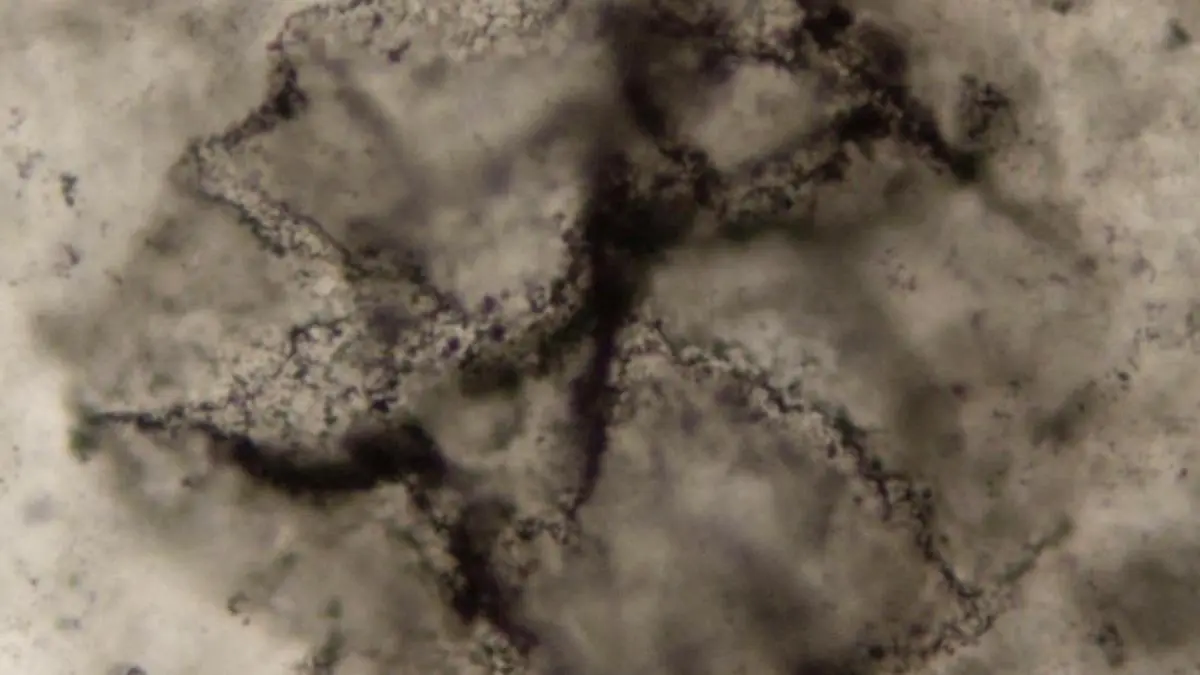
Recent scientific advancements have led to the discovery of some of the oldest signs of life on Earth, dated back to approximately 3.3 billion years ago, utilizing an innovative method that identifies chemical fingerprints in ancient rocks. This approach not only sheds light on Earth's early biological history but also offers new avenues for searching for extraterrestrial life. Researchers found microbe-related molecular traces in ancient South African rocks, suggesting that organisms capable of oxygen-producing photosynthesis existed as early as 2.5 billion years ago. The method employs machine learning to distinguish between biologically originated organic molecules and nonliving ones with over 90% accuracy.
The lead scientist, a mineralogist and astrobiologist, highlighted how the technology manages to extract significant insights from highly degraded organic materials, marking a paradigm shift in the study of ancient life. Traditional methods primarily relied on fossil remains, which are scarce and often difficult to analyze due to their age. In contrast, this new approach focuses on identifying biomolecular traces within ancient sedimentary rocks. These discoveries include evidence that oxygen-producing photosynthesis occurred much earlier than previously documented, potentially pushing back our understanding of Earth's atmospheric changes.
The researchers emphasized that their methodology has revolutionized the timeline for identifying signs of life from 1.6 billion to 3.3 billion years. It’s not just effective in detecting life, but also can differentiate between various types of organisms. Moreover, the use of machine learning allows for a more nuanced analysis, presenting an exciting prospect for future astrobiological studies, especially concerning Mars and other celestial bodies in our solar system.
With a NASA grant secured to further develop this innovative technique, there are exciting implications for missions aimed at Mars. Scientists express hope that this new method could enhance the ability to uncover past life on Mars, as well as in other potentially habitable environments across our solar system, such as the moons Enceladus, Titan, and Europa. This advancement marks a significant leap in our ongoing quest to understand life, both on Earth and beyond.